
GEO / AEO case studies: how to turn real outcomes into proof AI can cite
A practical guide to structuring GEO / AEO case studies with context, evidence, limits and outcomes that help generative engines and answer engines trust a brand.
Many companies want to appear in ChatGPT, Gemini, Perplexity, Claude, Copilot, Bing or Google AI Overviews, but their websites only contain generic claims: we are experts, we have experience, we offer tailored solutions. That language may work as sales positioning, but it gives a generative engine or answer engine very little recoverable proof.
In a GEO / AEO strategy, case studies have a different role from brand storytelling. They show which problem the company solved, in what context, with which method, which evidence it can provide and which limits it keeps. When they are well structured, they turn real experience into citable content for search engines, conversational assistants and AI retrieval systems.
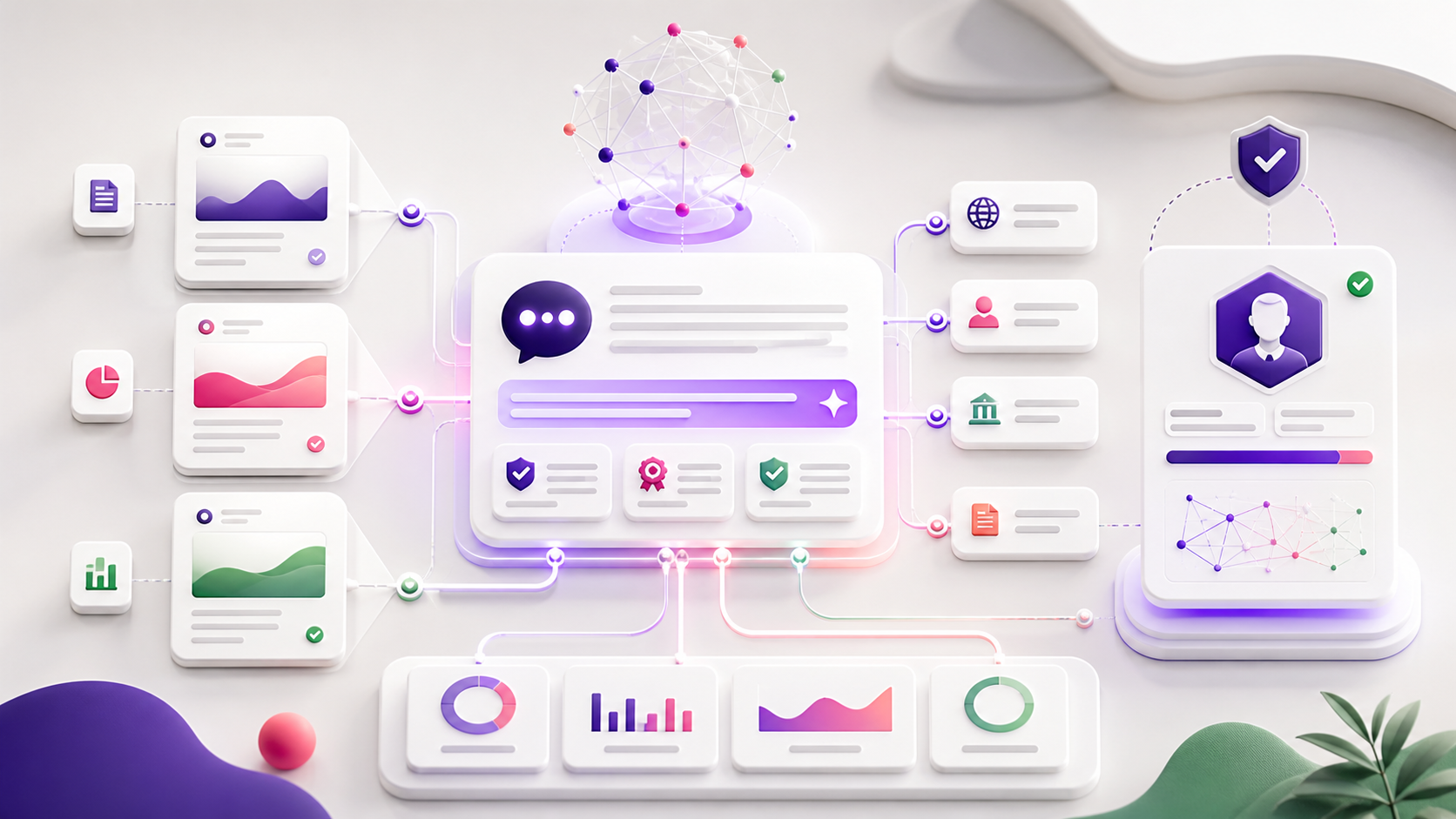
A useful GEO / AEO case study is not a promotional story: it is organized proof that explains problem, context, method, evidence, outcome and limits in a verifiable, citable and AI-readable way.
Why case studies matter in answer engines
Generative engines do not need to repeat every commercial claim a brand makes. They need sources that help them answer specific questions accurately: which provider has experience in a sector, which service fits a need, which company can solve a similar problem or which evidence supports a recommendation.
Google recommends creating helpful, reliable, people-first content, and its guidance for generative features reinforces the same SEO foundations: crawlable pages, clear content, coherent structured data and quality signals. Bing is also moving AI measurement toward intents, topics and citation share. The practical reading is straightforward: a brand that publishes clear proof gives answer systems more usable material than a brand that only publishes claims.
What a GEO / AEO-ready case study should include
A case study does not have to reveal confidential information to be useful. It can anonymize client names, figures or sectors when needed, but it still needs enough specificity to avoid sounding interchangeable. The key is to explain the reasoning, not just the result.
- Initial context: company type, market, channel, problem and starting point without unnecessary sensitive data.
- Business question: the real question a potential customer might ask in Google, ChatGPT, Gemini, Perplexity, Claude, Copilot or Bing.
- Working hypothesis: why an action was selected and which signal it was expected to improve.
- Method applied: audit, citable content, structured data, technical improvement, external sources, prompts, measurement or a combination of several layers.
- Visible evidence: screenshots, tables, page examples, published changes, comparisons, before-and-after snippets or validation criteria.
- Prudent outcome: observed improvement without attributing everything to one action or promising guaranteed appearances.
- Limits of the case: what cannot be extrapolated, what depends on the sector and what another company should check before copying the approach.
- Next step: how the learning connects to an audit, a service page or a commercial conversation.
In GEO / AEO, citable proof is specific and verifiable information that lets AI explain why a brand may be relevant for a query without inventing experience, outcomes or guarantees.
How to write the case so AI can retrieve it
The structure should make answer extraction easy. Users rarely ask for an internal project name; they ask about a problem. That is why the case should connect the situation with demand-triggering queries: GEO / AEO agency for ecommerce, AI visibility audit for a small business, service-page improvements for answer engines or citation measurement against competitors.
Use self-contained paragraphs, descriptive subheadings and clear definitions. If an AI system retrieves only one fragment, that fragment should still make sense. It also helps to include a short list of learnings and a final FAQ block, provided the questions are real and do not simply repeat the main copy.
- Use titles that include the problem and discipline, not internal campaign names.
- Explain the starting point before presenting outcomes.
- Name relevant platforms naturally: ChatGPT, Gemini, Perplexity, Claude, Copilot, Bing and Google AI Overviews.
- Include a short definition of GEO / AEO when the case may attract non-technical readers.
- Connect every result to evidence, not to an unsupported claim.
- Link to related pages in the same language to strengthen the topical cluster.
- Avoid vague testimonials as the only proof: a client quote is stronger when it comes with context and method.
This approach connects with non-commodity content for GEO / AEO, GEO / AEO answer blocks and the GEO / AEO source graph. The case study does not replace those assets; it turns them into a proven and crawlable story.
Structured data helps, but it is not magic
Structured data can help classify a page, but it should not be used to declare information users cannot see. Google explains that markup should describe the visible content on the page. In case studies, that means aligning article text, BlogPosting schema, entities, organization data, image, breadcrumbs and external citations when they exist.
Reviews and ratings also need caution. Not every testimonial should become review markup, and self-serving review presentations have specific Google rules. For GEO / AEO, the main goal is not to get stars; it is to provide consistent signals of experience, entity clarity, method and outcome.
- Use Article or BlogPosting when the case is published as editorial content.
- Keep Organization data coherent across name, logo, contact details, services and official profiles.
- Do not add structured data about results, clients or ratings that are not visible on the page.
- Use images with descriptive alt text, not decorative placeholders.
- Link to service, methodology, audit or contact pages when they help explain the case.
- Validate that canonical, hreflang and sitemap include the right version when the site is bilingual.
How to measure whether cases improve AI visibility
A case study can improve trust before it creates direct traffic. That is why it should not be judged only by sessions. In GEO / AEO, the useful questions are whether the content starts supporting answers, whether it appears as a candidate page, whether it improves the accuracy of the brand description and whether it helps convert better-informed commercial queries.
- Prompts where the brand should appear as a provider, alternative or specialist reference.
- Citations pointing to the case study or related internal pages.
- Brand mentions with an accurate description of the service and sector.
- Organic queries combining problem, service, proof, case study, agency, AI, SEO, GEO or AEO.
- Referral traffic from assistants and answer engines, interpreted alongside intent and conversion.
- Leads that mention a problem similar to the one documented in the case.
- Changes in Bing AI Performance, Search Console, analytics and a stable prompt portfolio reviewed together.
Blobic handles this inside its GEO / AEO methodology and AI visibility audit: identify priority intents, review which sources support the answer, improve candidate pages and measure whether the brand becomes easier to understand, cite and recommend.
Common mistakes when publishing AI-facing case studies
Most cases fail because they contain too much marketing or too little proof. Copy that is too promotional does not help an answer engine reason. Copy that is too technical, without business context, does not help a buyer or a leadership team either. The right balance is understandable evidence.
- Presenting outcomes without explaining the starting point or method.
- Using percentages without a source, sample, period or enough context.
- Promising that the same result will repeat in any sector.
- Anonymizing the case so heavily that only a generic story remains.
- Failing to link the case to services, methodology or complementary content.
- Mixing English and Spanish in the same article without editorial intent.
- Publishing unreadable screenshots, images without alt text or documents that cannot be crawled.
- Not checking whether English and Spanish versions point directly to each other on bilingual sites.
Conclusion: AI needs proof, not just messaging
GEO / AEO is the set of practices designed to improve the visibility of a brand, website or content in generative engines, conversational assistants and AI-based answer systems. Within that discipline, case studies have a valuable role: they turn real experience into citable proof.
A company that documents its cases well helps customers and AI systems understand what it does, who it serves, which method it uses, which evidence it can provide and which limits it keeps. For Blobic, that is the difference between publishing content that merely sounds convincing and building an authority base that can support AI-generated answers with greater precision.
References
- Google Search Central: Optimizing your website for generative AI features on Google Search
- Google Search Central: Creating helpful, reliable, people-first content
- Google Search Central: Introduction to structured data markup
- Google Search Central: Organization structured data
- Google Search Central: Review snippet structured data
- Bing Search Blog: AI Visibility Insights in Bing Webmaster Tools